
You will not be the same
Why the Next Evolution of Travel Is Not About Seeing More — But Becoming More

From time to time, I share moving essays, articles, podcasts, or otherwise that spotlight other perspectives on the power and opportunity of travel.
This one is from a friend and colleague of mine, Juan Ortiz. I met Juan at our first Transformational Travel Council Member Gathering in the Central Cascades of Washington State back in early 2020.
Juan read this aloud to a group of travel companies in London last Fall … I hope you enjoy! (Machismo gracias, Juan)
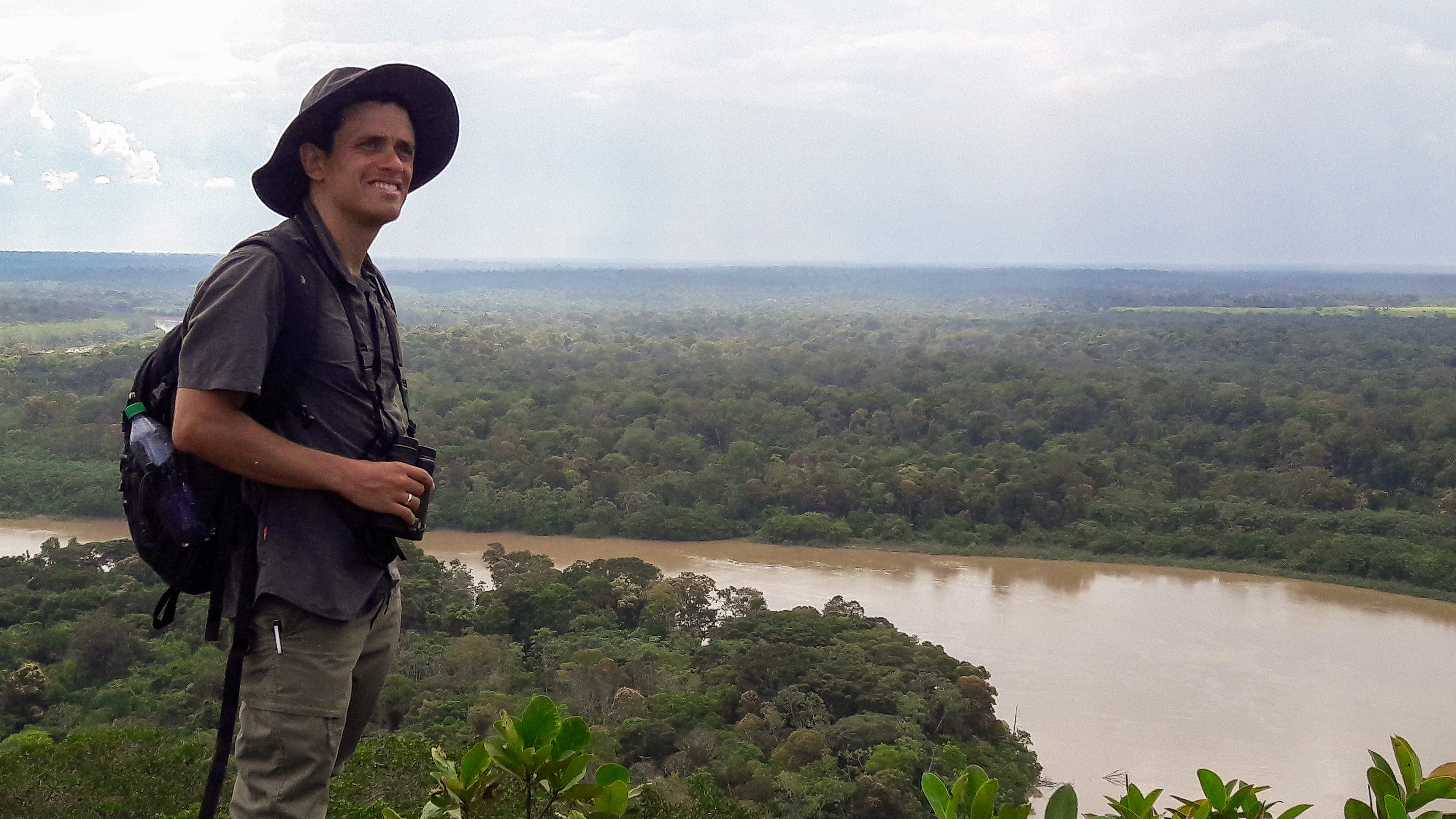
Photo: Juan Ortiz
We’ve been travelling since the dawn of time, sometimes to explore, many times to survive. Our ability to adapt has maybe been our most powerful trait as humans, a trait that has enabled us to connect the world and create technological advances that have, to a certain extent, created the society we know and are part of today.
To travel is to adapt, to adapt is to transform.
When we talk about the ‘next big thing’, it almost sounds like a game, vulgar even; what can we sell next? What will our clients want to spend their money on now? They’ve experienced everything; now what are they looking for? Maybe it’s society getting bored with focusing on the self. After all, experience-focused travel, if it isn’t focusing on what we can see, taste, smell, hear, and touch, then what is it? Is the definition of experiential travel like having the 30-course menu, momentarily sparking the taste buds, only for them to resume normal service once it’s all over? To travel is to light oneself up like a Christmas tree; we’ve all been there - it’s why we feel so invigorated when we go to someplace new, especially a place where its culture and geography are so different from what we know – we literally come alive with the sense of the different, of the new, of the wow. Adapting to the new is an undercurrent of life that we navigate through every day – change is typically hard, but oh so good (eventually, right?).
But is it enough? Is it nothing more than trying that new restaurant or seeing that new film? We come away wiser for the experience, but largely the same most of the time. We’re left wanting, albeit we’re able to tick another box, maybe? The experiential focuses on the self; what we can see, what we can touch, what we can taste, and then it’s done. And then we release a bit more of the feel-good factor when we share our endeavours via various platforms, pre, during, and post-trip.
But you see this way the hunger is never satiated – never satisfied, some of us clamber for more.
But to where?
Well, we’re seeing an evolution in travel as we shift from the experiential into the transformational. Is it because we’re bored of seeing a new experience cooked up 50 different ways? Or is it because we’re being exposed to contexts, to environments and to societies that are completely different to those in our developed world and, we, acknowledging that we’re better off, feel impelled to act; or maybe it’s because in our day-to-day comfort we feel the need to come alive, to push ourselves and be who we were born to be – an intrinsic urge to become our best selves, before we fade into the twilight; we feel that impulse to pay it forward, to step out of the mundane?
There is something that is driving us and maybe it’s a combination of all of these, maybe it’s the awareness that our planet needs us all, pushing in some direction together to make it a better place before it’s too late, and we’re aware that when we travel to these weird and wonderful places that have only existed in our dreams – we have the opportunity to enact that change. To do something real. And note – not to receive, but to give.
Experiences are what, though? They’re the form.
Experiences form the basis of the next level - transformation, which, for me, is the why.
The causation. What makes something special? What’s its story? What’s the story behind the wine you’re going to taste tonight? What are the stories behind the hotels that Mili represents? What are your own stories of why you yourselves became immersed in travel to enable thousands of others to live their wildest moments? I’m interested in all of this because I love stories.
The story is what makes us care, makes us want to know more, to help even, to sometimes dedicate our lives to a cause – to transform. When I began on this path back in 2008, it started as a simple desire to show people an amazing place. It didn’t matter how it was going to happen, I just knew it had to be. However, the more I got to know my destination, its people, its nature, its history, its conflicts, the more I cared, and the more I cared, the more wanted to help, and that eventually transformed into a purpose – to be an ambassador for both people and nature and to use travel as a vehicle to change the world (and us) for the better.
The more I knew, the more I cared. The more I cared, the more action I took.
But then, aside from the cultural, natural, social,l and historical contexts we can all be exposed to during a trip, what about our own story? Do we know ourselves? Do we want to know more? Is there something we’d like to change or test within ourselves? Are we looking for purpose? Are we looking for meaning? Are we looking for a guiding star that will lead us out of the darkness?
Are we looking for something that sets fire to our souls?
There are psychological studies that show that helping others fosters fulfillment through the activation of the brain’s reward system, leading to the release of endorphins, dopamine, serotonin, and oxytocin, all of which boost mood and reduce stress. We like helping others. It’s in our nature. It’s in our chemistry. We’ve been engineered that way, to survive as a species, to thrive as a people. And now, with our collective consciousness elevating past our survival states, we choose to help others because it’s righteous.
The next part is copied from Google’s AI assistant search thingy.
Some studies show that feelings of being at one’s best are strongly linked to pursuing personal growth and development – we’ve all heard of Carol Dweck’s ‘Growth Mindset’ theory – which connects personal best feelings to the belief that abilities can be developed through effort and challenges.
Thriving and well-being are also associated with engaging in opportunities for self-determined goals, meaningful contributions, and positive challenges, all of which foster a sense of fulfillment and competence.
You probably know where I’m going with this. Transformational travel, where we envisage giving back, leaving the place better than when we found it, fostering and nurturing nature and local communities, learning, interchanging ideas, opening the mind to other perspectives, other worldviews, other knowledge – it’s intrinsic to our nature. It makes us feel good. It’s what (maybe) we’re here to do, without getting too spiritual about it. Transformational travel is about making change(obviously positive) to the world around us and to ourselves. Through that family that we met t, which has been through unimaginable hardship and yet still smiles and invites you into their home for a meal prepared with love and care. Through that patch of forest that was torn down for illicit cultivation, you can make it live again through the planting of a single tree. Through that visit to a place where a group of people have borne it from love and dedication to an ideal, to principles of zero impact and regeneration. Through that hike into the unknown, or that boat ride up a tributary to a camp on the edge of the world, far from the comforts you’ve always known, yet with the discomforts that focus the mind and show you how resilient, how adaptable, and just how capable you are.
Specifically, and to refer to reason why you’re here tonight – these hotels, through their concepts, their locations and their reasons for being also offer opportunities to transform: AWA offers you an unparalleled location in the Northern Patagonia of Chile, a land of lakes and volcanoes; a moment of silent contemplation where one can completely disconnect from the fuzzy, noisy, electronic outer world and reconnect with the inner, for it is only in this way that we can truly know and understand ourselves. After this silence and complete immersion in nature,e the regulation of the nervous system follows, a world away from the chatter, an opportunity to become still, and perhaps in the silence, life-changing shifts in perspective can occur that will leave you altered, and ready to live life differently upon your return. Remember, any change is good change, no matter how small; following on, PATA – a wilderness project which invites people to rethink their lives, an enticement into letting go of the built environment to return to simple, healthy, self-sustainable living, a return to nature, becoming part of a like-minded community deep in the Futaleufu and Azul river valleys in the Pumalin and Patagonia National Parks. A short visit may leave you with clarity on where you want to spend the next chapter of your life; or maybe it’s a stay in Santa Rita, where the Maipo Valley is the setting for a beautiful story of wine, of history, of culture – a fantastical setting showing how dreams can be accomplished with love, time, effort and dedication to a cause, to a passion of bringing the very best wine (of which you will be tasting) to the world; or perhaps it’s Carlota, a personal project of artistic and architectural detail, which accentuates the local classical styles of Quito, preserving that which has value, yet blending with modern values, ensuring that your stay aligns with the most stringent sustainability standards – a quiet, small boutique hotel where special moments can be created, which can again last a lifetime. All of the above inspire wonder in what can be achieved and brought into being for the good of the world through love, purpose, and dedication.
Not everyone wants to change. In fact, many of us have parts of ourselves that we either don’t want to or don’t need to change. But you’d be surprised by how many of us would like to. Maybe you’re not surprised. To be clear, transformation has to be borne and set loose from the self; it cannot be sold, it cannot be forced. We can provide the contexts and moments where potential change can occur. If we care, then it’s likely others will too. If we think it’s a special story, then it’s likely others will too. Passion, and the love from which it stems, is contagious. It warms the soul.
There, of course, will always be a place for experiences, for travel that transforms, and cannot exist without the basis of experience. All it does is enrich and deepen them to a point where their power becomes a self-perpetuating chain reaction. It makes them mean something to someone or to ourselves. We shift into the next level of perception. Advocating for experiences – we do deserve to indulge ourselves, right? Sometimes our holidays are the largest investment in ourselves and our families, which we’ll make in any given year, so people deserve to enjoy, deserve to be comfortable, and deserve to continue to live in a bubble of the known throughout their trip. That is no criticism, to reward oneself is self-love, absolutely nothing wrong with that.
But the restless will look for the next thing, maybe it’s an inner calling and not just an empty tick box. And whereas this is an enormous economic opportunity, we need to warn clients of the power that a transformational trip can have on them, which may well end up being one of the most valuable things they’ve ever done.
I’ll finish with this.
I’m a bit of a Lord of the Rings nerd, and whilst The Hobbit film trilogy took some flak when they came out, I enjoyed them very much. Now that I’m thinking about it, maybe I’m drawn to Tolkien’s Legendarium and world of Middle-earth because it permits me the most fantastical journey of the mind.
Anyway – there’s a scene towards the beginning of the first film where Gandalf the Grey, an ancient, bearded wizard (played by Sir Ian McKellen) – who, apart from being quite gruff and mysterious is actually a maiar, a divine being tasked with safeguarding Middle Earth – is trying to convince Bilbo Baggins (the Hobbit) of partaking on an adventure.
The Hobbit, who is very much used to his comfy, warm, inviting hobbit hole and a quiet, unassuming provincial life, has just spent the previous night being an unexpected host to a rabble of rough and tumble dwarves who are led by Thorin Oakenshield. Bilbo is invited to become the 14th member of their company, specifically as a burglar (something which, proudly, he’s never done before).
As Bilbo weighs up his options, clearly leaning towards remaining at home, he is confronted by Gandalf, who spins the die one last time trying to convince his friend to join them, knowing deep down the unrealised potential Bilbo has within, that he himself is not aware of (worth noting – for nerds – this is not a canonical scene and is one which was put together by the film’s screenplay writers). Bilbo considers the many discomforts of life on the road, the myriad risks, such as orcs, fire-breathing dragons, months-long hikes into the dangerous wilderness, and the very real possibility of a horrible death.
Gandalf says to him: You’ll have a tale or two to tell of your own when you come back.
Bilbo responds: Can you promise that I will come back?
Gandalf replies: No. And if you do, you will not be the same.
Bilbo says: That’s what I thought. I’m sorry, Gandalf, you’ve got the wrong hobbit.
With that, Bilbo goes to bed. The next morning, he wakes after a peaceful night’s slumber, startled by the lack of noise and that the dwarves, who had driven him to his wits’ end the night before, have disappeared. They’ve begun their journey. Initially, Bilbo’s delighted, but after a few moments of being left alone with this thoughts in the silence he suddenly realises his mistake and bursts out of the door, ready to embark on an adventure that will not only change him and his life forever, through a series of incredible situations and experiences that are the polar opposite of what he is used to (and undoubtedly what he’d typically choose to do), but unknown to him, will also change the course of Middle Earth.
So, while I’m 100% sure we all intend to bring our clients back safe and sound, not having to confront fire-breathing dragons, my question to you is this: What opportunities are there to change our destinations, our clients, and our world, through this thing we love called travel?
Thank you,
Juan Ortiz
Powerful essay. The Gandalf quote cuts to the core of what makes travel meaningful. Juan's point about stories being what makes us care is exacty right. I once spent time with a family in rural Peru and their story reframed my understanding of resilience way more than any scenic viewpoint. That shift from experiencial to transformational feels less like marketing and more like honesty.